

With the rapid advancement of artificial intelligence, a significant area experiencing groundbreaking developments is speech generation and comprehension. Machines can now speak, listen, and understand human language, moving beyond science fiction to become essential in our interactions with technology.
Among the entities at the forefront of this change is Suno AI, a firm that has risen as a leader in AI-based voice synthesis and language comprehension. Through its cutting-edge speech technologies, Suno AI is not only generating voice; it is reshaping the concept of how machines can “speak” and engage with people.
This blog post will examine what distinguishes Suno AI, its fundamental features, and the tangible effects it is currently having in various sectors—ranging from customer support to content production, accessibility, and more.
What is Suno AI?
Suno AI is a sophisticated platform that utilizes artificial intelligence to create highly lifelike, emotionally resonant, and contextually mindful speech. Suno fundamentally seeks to develop technology that mimics human-like voice interaction—allowing machines to communicate naturally, react suitably, and express emotions through their speech.
In contrast to conventional text-to-speech systems that frequently sound artificial or monotone, Suno AI’s models utilize deep learning methods to grasp the subtleties of genuine human dialogue, such as tone, emotion, rhythm, and pacing. Whether telling a podcast story, assisting a user with an app, or interpreting languages instantly, Suno is designed to improve communication in the most natural manner.
Key Features of Suno AI
Suno AI stands out in a competitive field thanks to a set of sophisticated features that elevate its voice capabilities beyond conventional solutions.
1. Natural Language Processing (NLP)
A key strength of Suno AI is its expertise in Natural Language Processing. NLP allows the system to grasp not just the literal definitions of words but also their purpose and context. This enables Suno to understand intricate sentences, reply with contextual appropriateness, and modify its replies according to nuanced linguistic signals.
Regardless of whether the aim is to respond to customer inquiries, tell a story, or engage in live discussions, Suno’s NLP engine guarantees smooth, logical, and context-sensitive communication.
2. Human-Like Voice Synthesis
Voice quality is an area where Suno really stands out. Its synthesis models generate speech that appears remarkably authentic—featuring natural intonation, varied pacing, and emotional conveyance. This leads to realistic voice communications that far exceed the robotic sounds typically linked to standard text-to-speech software.
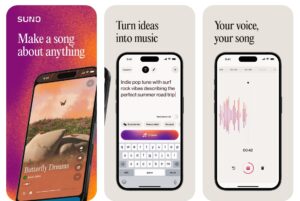
Suno provides a variety of voice profiles, each customizable for tone, gender, accent, and character. Users can customize the voice to align with the intended experience, whether it is formal and professional or warm and conversational.
3. Emotion Recognition and Expression
A remarkable aspect of Suno AI is its capability to recognize and convey emotions in voice. The platform is capable of examining emotional nuances in a dialogue—like anger, happiness, or urgency—and subsequently modify its voice output to align with the suitable emotional reaction.
This ability creates valuable applications in fields like customer service, mental wellness, and engaging media, where emotional subtleties greatly improve the user experience.
4. Real-Time Multilingual Translation
Suno AI offers real-time speech translation across several languages, positioning it as a crucial resource for international communication. In contrast to conventional translation tools that prioritize literal accuracy, Suno maintains tone, intent, and cultural context in its translations—leading to more authentic and significant interactions across languages.
This capability is especially beneficial in business conferences, global gatherings, and academic settings where smooth communication is crucial.
5. Custom Voice Creation
For brands and content creators, personalized voice cloning is one of the most attractive attributes. Users can develop distinctive, brand-oriented voices that ensure uniformity across digital platforms. This enables companies to create a distinct audio identity—be it a soothing and comforting voice for a healthcare application or an enthusiastic tone for a digital fitness trainer.
Personalized voices can also enhance accessibility tools and personal voice assistants, providing users with a deeper sense of control and customization in their engagement with technology.
Applications Across Industries
Suno AI’s versatility means it can be applied across a wide range of sectors. Let’s explore how it is already making an impact.
1. Customer Service and Virtual Assistants
Suno AI is transforming customer support with voice-enabled chatbots and virtual assistants. These AI helpers can manage questions quickly and precisely, all while keeping a human-like tone. The capacity to recognize emotions enables these agents to react with empathy, leading to more seamless and fulfilling customer engagements.
In busy settings, this leads to shorter wait times, more reliable service, and enhanced customer loyalty.
2. Content Creation and Media Production
For audiobook, podcast, video, and e-learning course creators, Suno AI provides a quicker, more versatile method to produce high-quality voice content. Extended recording sessions aren’t necessary—scripts can be converted into fluid narration nearly right away.
Additionally, the emotional depth of Suno’s voices enhances storytelling, rendering narratives more captivating and interesting.
3. Accessibility and Assistive Technology
A significant application of Suno AI lies in the realm of accessibility. Individuals with visual impairments or challenges in reading can gain advantages from AI-generated voices that vocalize content with clarity and emotion. For those with speech difficulties, Suno provides an opportunity to “communicate” using a customized voice, promoting self-sufficiency and social inclusion.
Its instant translation and support for multiple languages also enhance the accessibility of education and information for non-native speakers globally.
4. Education and E-Learning
In online education settings, Suno can function as an interactive, conversational instructor. By speaking naturally and expressing emotions, it clarifies complex subjects more effectively while maintaining learner interest.
Educational institutions and platforms can utilize Suno to provide content in various languages, guaranteeing wider accessibility and enhanced comprehension for diverse groups of students.
Looking Ahead: The Future of Human-AI Voice Interaction
The emergence of Suno AI indicates a larger transition toward interfaces that are more natural and emotionally aware. As technology evolves, we can anticipate that voice will emerge as the primary method of interaction across various devices and platforms.
Soon, we could communicate with AI not merely via typed commands or robotic voices, but through dialogues that genuinely resemble human interaction. AI companions capable of providing comfort, coaching, storytelling, or entertainment—while honoring human emotions and context—are readily accessible.
The development of Suno AI demonstrates the possibilities of integrating linguistic intelligence with emotional insight in machine learning. It brings us nearer to a world where machines comprehend not just our words but also our emotions behind them.
Conclusion
Suno AI signifies a substantial progress in the domain of speech synthesis and AI-enhanced communication. Through its advanced voice generation, profound language comprehension, and emotional awareness, it is establishing a new standard for our interactions with technology.
Whether utilized in business, education, healthcare, or creative works, Suno AI demonstrates that the future of voice is not mechanical—it’s profoundly human.
With the ongoing evolution of voice technology, platforms such as Suno AI will be pivotal in creating a more natural, accessible, and emotionally aware digital landscape.